
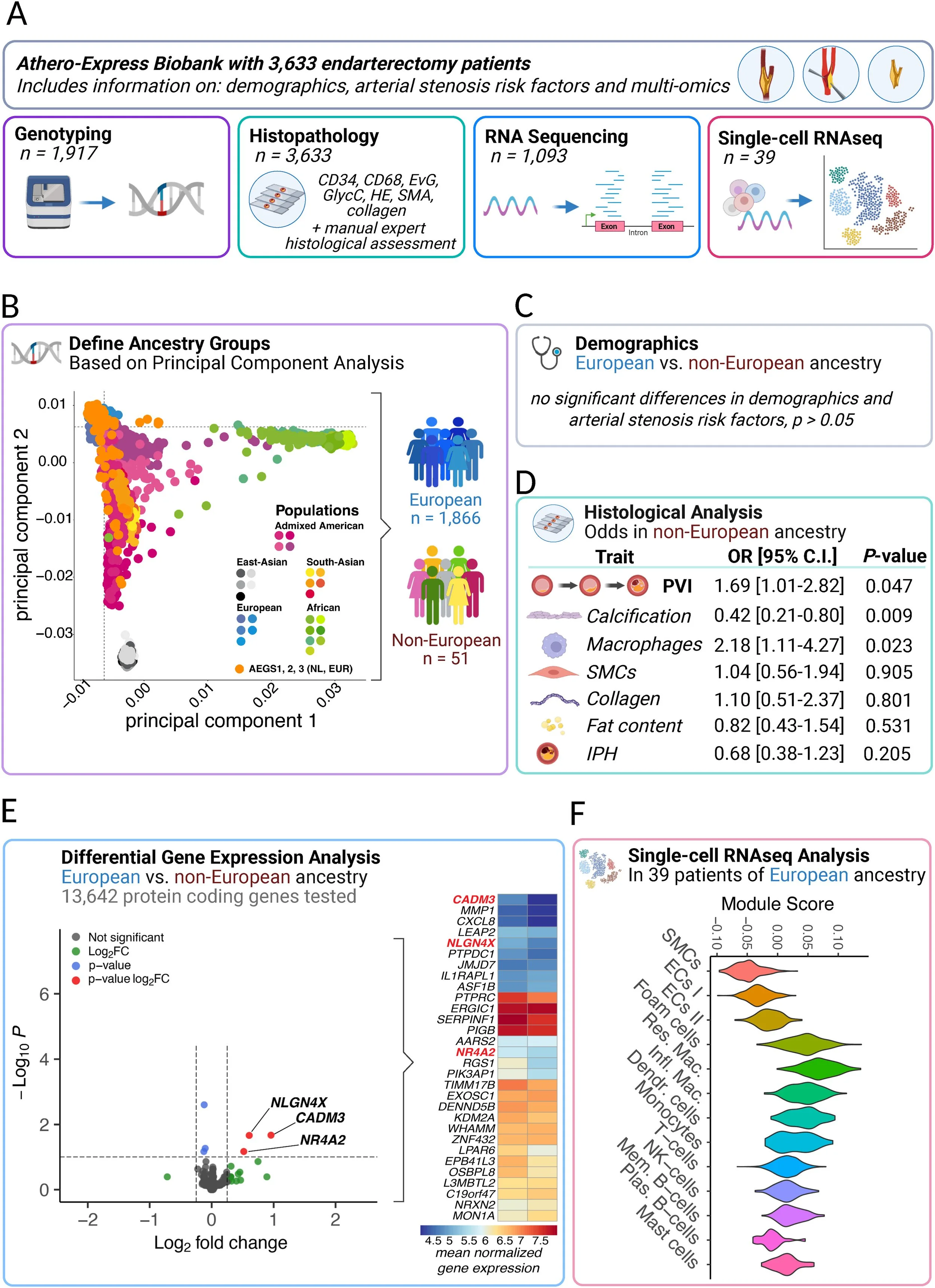
The study summary
Genetically determined ancestry correlates with specific plaque morphological and molecular features.
Cardiovascular disease (CVD), mainly driven by atherosclerosis, is correlated to a plethora of factors: age, sex, diabetes, smoking, hypertension, genetics, socio-economic status. Yet these alone can’t fully explain why ethnic disparities in CVD exist. For example, coronary artery calcification, a marker of atherosclerosis, increases with age regardless of ethnicity, yet remains more prevalent in individuals of European descent, and more so in men than women.
To better understand these disparities, we turned to genetic ancestry - a more precise and objective indicator than self-reported ethnicity. Using data from the Athero-Express Biobank Study, a Dutch cohort with details atherosclerotic plaque analyses from nearly 2,000 patients, we identified two ancestry groups: European (1,866 patients) and non-European (51 patients), reflecting the Nethderlands’ diverse population and migratory history. Importantly, classic risk factors such as age, blood pressure, cholesterol, and diabetes did not significantly differ between groups — meaning any plaque differences we observed are unlikely to be explained by these alone.
Our findings showed that non-European ancestry correlates with increased plaque vulnerability, meaning plaques were more prone to rupture which associates to cardiovascular events (OR=1.67, p=0.045). Specifically, non-European plaques showed higher inflammation (more macrophages) and lower calcification, a combination associated with greater instability. Gene expression analyses highlighted specific genes, like NLGN4X and CADM3, related to inflammation and cell adhesion. Pathway analyses further confirmed a broad inflammatory signature in plaques from non-European individuals, with macrophages emerging as key drivers.
These results emphasize that genetic ancestry matters in the biology of atherosclerosis, likely independent of traditional risk factors. Including more diverse populations in cardiovascular research is vital to uncover differences in disease mechanisms and develop personalized, equitable therapies for everyone.
Updated March 5, 2026.